Section 179 Vehicles: Which Fords Qualify in 2026
If your business buys a truck, van or SUV and puts it to work before December 31, you may be able to write off most or all of it this tax year instead of over six.
A Ford qualifies for the Section 179 deduction when it is rated above 6,000 pounds GVWR and used more than 50 percent for business. The F-150, Super Duty, Transit, Expedition, Explorer and Ranger all clear that line. Trucks with a bed of six feet or longer, and cargo vans, skip the $32,000 cap entirely.
- 2026 Section 179 limit
- $2,560,000
- Heavy SUV cap
- $32,000
- Bonus depreciation
- 100 percent
- Deadline
- December 31, 2026
- Business use required
- More than 50 percent
- Where to buy in Clarksville
- 2655 Trenton Rd, Clarksville, TN 37040
What is the Section 179 deduction?
Section 179 of the IRS tax code lets a business deduct the purchase price of qualifying equipment in the year it is placed in service, rather than depreciating it over several years. Work vehicles count as equipment. For 2026 the ceiling is $2,560,000, which makes this a small and mid-sized business provision.
Normal depreciation spreads a $70,000 truck across six tax years. Section 179 pulls that deduction forward into the year you buy. The cash does not change, but the timing does, and timing is the whole point for a business that needs the deduction now.
Two things decide how much of a vehicle you can take. The first is gross vehicle weight rating, or GVWR, which is the maximum loaded weight the vehicle is rated to carry. The second is body style. A long-bed pickup and a three-row SUV are treated differently even when they weigh the same.
GVWR is not curb weight. It is printed on the certification label inside the driver's door jamb of the specific vehicle, and it is the number the IRS cares about. Two versions of the same model can land on opposite sides of the 6,000-pound line.
Which Ford vehicles qualify for Section 179 in 2026?
Most of the Ford lineup that a business would actually buy clears 6,000 pounds GVWR. The 2026 Ford F-150 is rated 6,500 to 7,050 pounds, Super Duty F-250 and F-350 are rated above 10,000, and the Ford Transit cargo van runs from 8,670 to 11,000 pounds depending on series.
The table below sorts the Clarksville lineup by how the deduction actually works, not just by whether the vehicle is heavy. The right-hand column is the one that matters: a vehicle over 6,000 pounds GVWR with a bed of at least six feet, or a cargo van, is not subject to the $32,000 heavy SUV cap at all.
The 2026 Ford Explorer is rated at about 6,160 pounds GVWR, which clears the threshold but keeps the SUV cap because it has no separate cargo bed. The 2026 Ford Bronco at roughly 5,920 pounds and the Ford Maverick at 4,970 to 5,330 pounds sit below the line.
| Vehicle | GVWR | Over 6,000 lbs | Section 179 treatment |
|---|---|---|---|
| Ford F-150, 6.5-ft or 8-ft bed | 6,500 to 7,050 lbs | Yes | No SUV cap. Full price available under Section 179 |
| Ford F-150 SuperCrew, 5.5-ft bed | 6,500 to 7,050 lbs | Yes | $32,000 cap, then bonus depreciation |
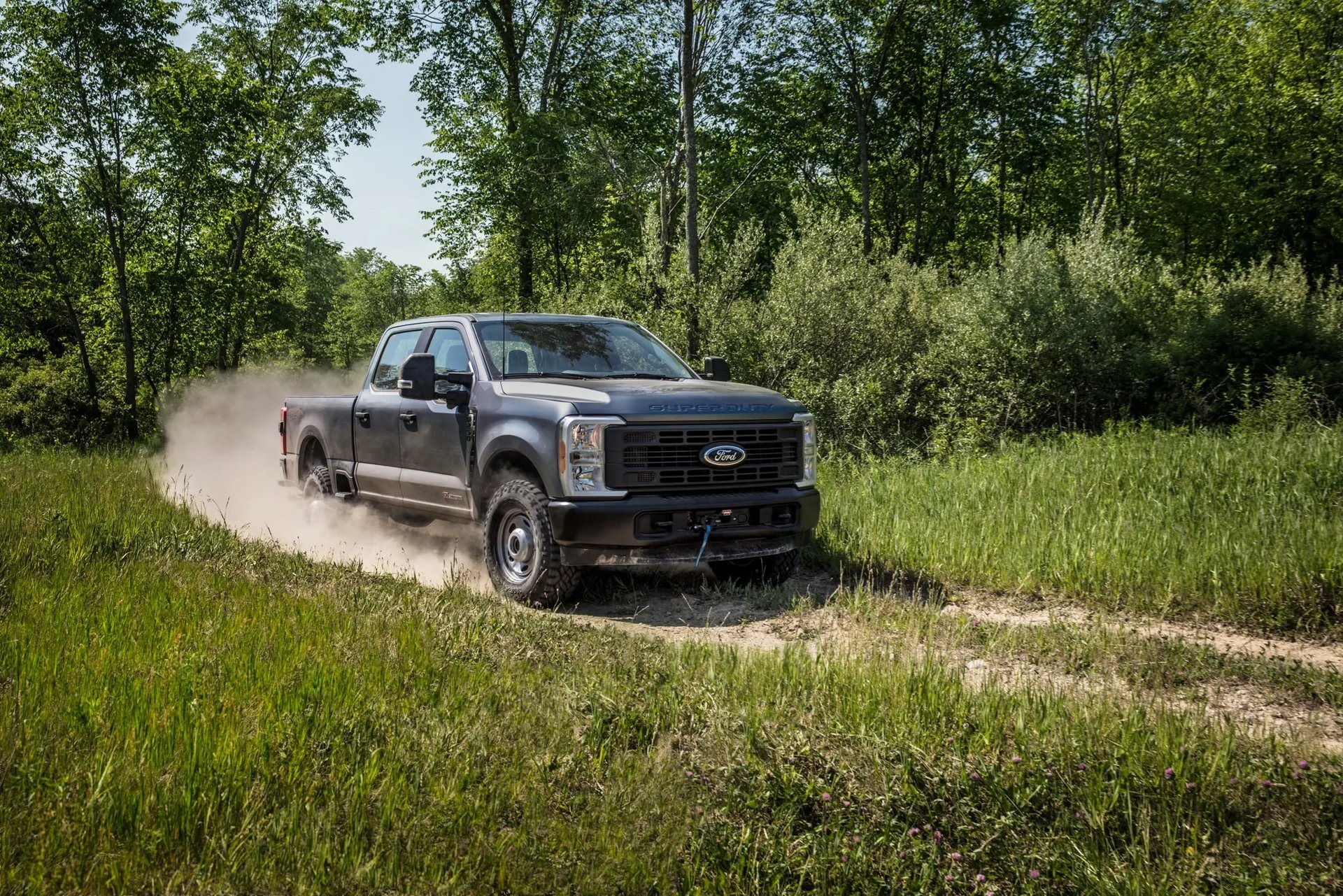
| Ford Super Duty F-250 and F-350 | Over 10,000 lbs | Yes | No SUV cap. Full price available under Section 179 |
| Ford Transit cargo van | 8,670 to 11,000 lbs | Yes | No SUV cap. Full price available under Section 179 |
| Ford Expedition and Expedition MAX | 7,400 to 7,700 lbs | Yes | $32,000 cap, then bonus depreciation |
| Ford Explorer | About 6,160 lbs | Yes | $32,000 cap, then bonus depreciation |
| Ford Ranger | 6,050 to 6,790 lbs | Yes | $32,000 cap, then bonus depreciation. Bed is under 6 ft |
| Ford Bronco | About 5,920 lbs | No | Passenger automobile caps apply |
| Ford Maverick | 4,970 to 5,330 lbs | No | Passenger automobile caps apply |
Ranger is the one that surprises people. It clears 6,000 pounds GVWR in most configurations, so it qualifies, but its bed is under six feet, so the $32,000 cap still applies. Weight gets you in the door. Body style decides how far you get.
Shop the new Ford F-150 inventory, the Super Duty F-250 lineup, or the Transit cargo vans on the lot in Clarksville.
Why does bed length change your Ford write-off?
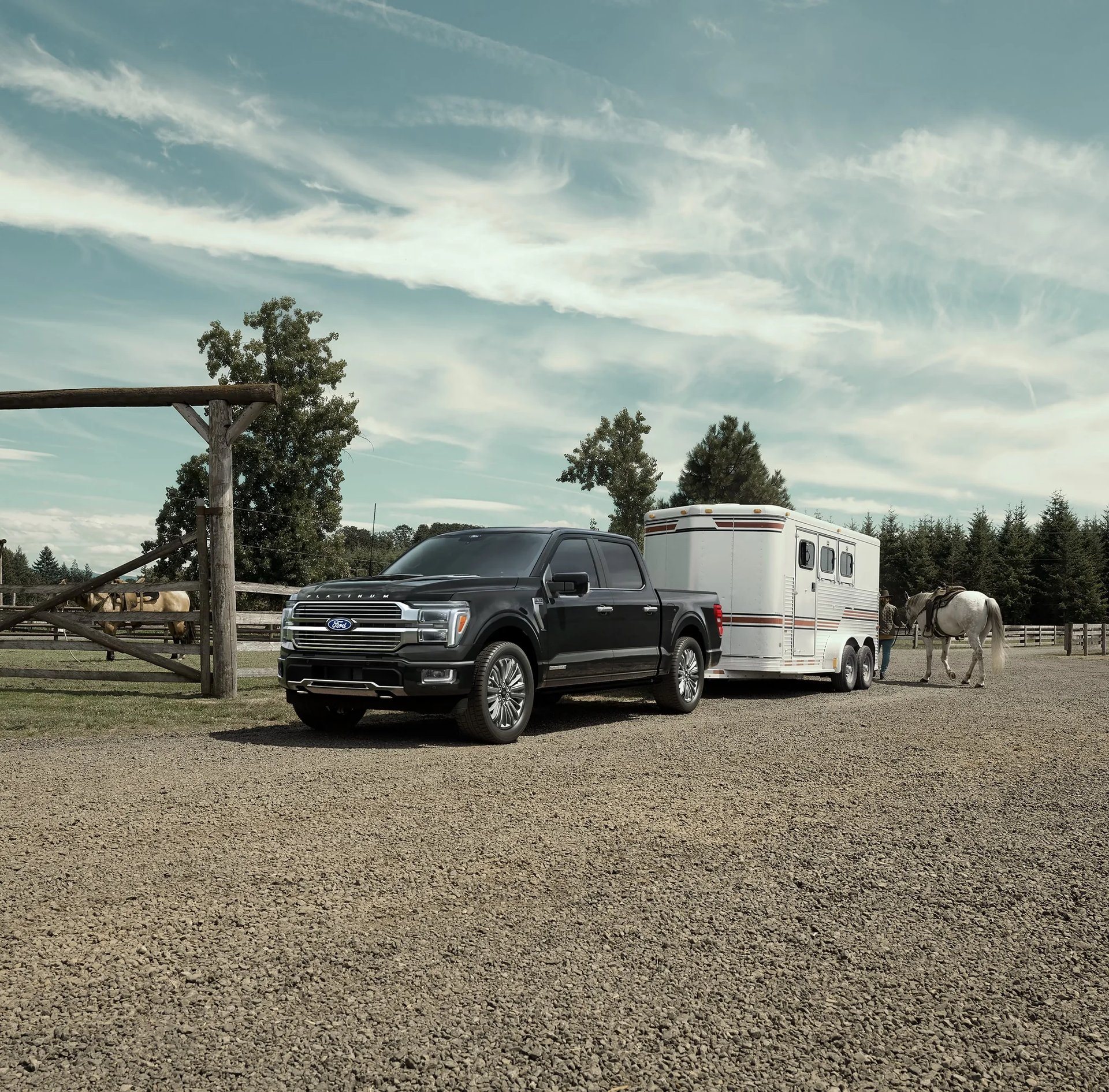
A pickup rated over 6,000 pounds GVWR whose cargo bed is at least six feet long, and not readily accessible from the cab, is excluded from the $32,000 heavy SUV cap. The same truck with a 5.5-foot bed is not. On a 2026 Ford F-150 that is a box you tick when you order.
This is the single most expensive detail on the page, and most buyers never hear it. The F-150 comes in three bed lengths. Regular Cab and SuperCab offer 6.5-foot and 8-foot boxes. SuperCrew offers 5.5-foot or 6.5-foot, and the 5.5 is the one most retail buyers take home.
Two identical F-150 SuperCrews, same trim, same price, different bed. The 6.5-foot truck can be expensed in full under Section 179. The 5.5-foot truck stops at $32,000 under Section 179, with the balance going to bonus depreciation instead. The deduction still lands, but it arrives through a different door and the paperwork differs.
Super Duty sidesteps the question. The F-250 and F-350 are offered with 6.75-foot and 8-foot beds, and 2026 added a SuperCab with a 6.5-foot bed. Every one of those clears six feet. Cargo vans skip the cap for the same underlying reason: the cargo area is not reachable from the passenger compartment.
What to check before you sign
- The GVWR on the driver's door jamb label of the actual vehicle, not the brochure
- The interior bed length, measured inside the box, not the truck's overall length
- Whether the vehicle is delivered and working before December 31
- Your business-use percentage, and whether you are logging it
Our sales team can read the GVWR off any unit on the lot before you commit. Ask for it by stock number and we will send a photo of the label.
What are the 2026 Section 179 dollar limits?
For 2026 the Section 179 deduction limit is $2,560,000, with the phase-out starting at $4,090,000 of equipment placed in service and the deduction gone entirely at $6,650,000. Bonus depreciation is back at 100 percent, which changes the math on capped vehicles considerably.
| Figure | 2026 amount | What it means for a vehicle buyer |
|---|---|---|
| Section 179 deduction limit | $2,560,000 | The ceiling on everything you expense this year, vehicles and equipment together |
| Phase-out threshold | $4,090,000 | Above this, the deduction reduces dollar for dollar |
| Fully phased out | $6,650,000 | Past this point Section 179 is unavailable |
| Heavy SUV cap, 6,000 to 14,000 lbs GVWR | $32,000 | The most Section 179 can take on an Expedition or Explorer |
| Bonus depreciation | 100 percent | Covers the basis left after the SUV cap, with no cap of its own |
| Passenger auto, first year with bonus | $20,300 | The limit on anything under 6,000 lbs GVWR |
| Passenger auto, first year without bonus | $12,300 | The same vehicle if bonus depreciation is not elected |
The return of 100 percent bonus depreciation is the part worth reading twice. A heavy SUV is often described as "capped at $32,000," which is only half true. Section 179 stops at $32,000, and bonus depreciation can then take the remaining basis. For a business at 100 percent use, the practical result is frequently a full first-year write-off anyway.
Section 179 is also limited by your taxable business income. You cannot use it to create a loss. Bonus depreciation can, which is one of several reasons the two interact in ways worth running past an accountant before you buy.
What does "placed in service by December 31" actually mean?
Placed in service means the vehicle is delivered to you and actually being used in your business, not merely ordered or paid for. A truck bought on December 20 that arrives January 8 is a 2027 deduction. For Section 179 in 2026, the vehicle has to be working by December 31, 2026.
This is where year-end purchases go wrong. Payment date is not the test. Possession and use are. Financing a vehicle does not hurt you here either: a business can finance a qualifying truck and still deduct it under Section 179 in the year it is placed in service.
From today, that leaves roughly two months. Trucks in stock on our lot at 2655 Trenton Rd can be delivered inside that window. A factory order placed now for a specific Super Duty configuration is the one to be careful about, because build and transit time can run past the deadline.
If you need a specific bed length, cab and axle ratio, the honest advice is to start that conversation in the next few weeks rather than in mid-December. Call 931-441-8041 and we will tell you what is actually deliverable before year end.
How much could a Clarksville business actually deduct?
A contractor buying a $72,000 Super Duty F-250 used entirely for the business could expense the full $72,000 in 2026, because the long bed keeps it clear of the $32,000 heavy SUV cap. At a 32 percent combined rate that is roughly $23,000 less tax, subject to business income.
The worked figures below are hypothetical and rounded. They are here to show how the rules interact, not to predict your return. Your rate, your entity type, your business-use percentage and your taxable income all move the answer.
| Scenario | Super Duty F-250, 8-ft bed | Expedition MAX |
|---|---|---|
| Assumed purchase price | $72,000 | $72,000 |
| GVWR | Over 10,000 lbs | About 7,700 lbs |
| Subject to the $32,000 SUV cap | No, bed is over 6 ft | Yes |
| Taken under Section 179 | $72,000 | $32,000 |
| Taken under bonus depreciation | $0 | $40,000 |
| Possible first-year deduction | $72,000 | $72,000 |
Both vehicles can reach the same first-year number in this illustration. They get there by different routes, and the routes have different limits attached. Section 179 cannot exceed your business income. Bonus depreciation can run past it. That difference is exactly the sort of thing your accountant will want to decide, not us.
We sell trucks. We do not give tax advice.
Jenkins & Wynne Ford is not a tax advisor and nothing on this page is tax advice. Section 179 rules, dollar limits and weight thresholds are set by the IRS and change from year to year. Figures here were current as of October 30, 2026.
Eligibility depends on your business, your entity type and how the vehicle is used. Confirm your situation with a certified public accountant before you buy, and confirm the GVWR on the door jamb label of the specific vehicle. See IRS Publication 946 for the governing rules.
Section 179 questions we hear from Clarksville business owners
Does the Ford F-150 qualify for Section 179?
Yes. The 2026 Ford F-150 is rated between 6,500 and 7,050 pounds GVWR depending on configuration, which clears the 6,000-pound threshold. Order it with the 6.5-foot or 8-foot bed and it also escapes the $32,000 heavy SUV cap, so the full purchase price can be expensed subject to your business income.
Can I write off 100 percent of a work truck in 2026?
Often yes, on a truck rated over 6,000 pounds GVWR with a cargo bed of at least six feet, or on a cargo van. Those are excluded from the $32,000 heavy SUV cap. Section 179 covers up to $2,560,000 and 100 percent bonus depreciation covers the rest, limited by your business income.
What is the Section 179 limit for SUVs in 2026?
The 2026 Section 179 cap on a heavy SUV rated between 6,000 and 14,000 pounds GVWR is $32,000. That is not the end of the write-off. The remaining basis can be taken under 100 percent bonus depreciation, which carries no cap of its own.
Do I have to take delivery before December 31?
Yes. The vehicle must be placed in service, meaning delivered and actually used for your business, by December 31, 2026. Paying in December for a truck that arrives in January moves the deduction into the 2027 tax year. This is why order timing matters more than payment timing.
How much business use does Section 179 require?
More than 50 percent of the vehicle's use must be for your business. The deduction is then scaled to that percentage. A truck used 70 percent for the business claims 70 percent of the figure. Keep a mileage log, because business use is what gets examined first.
Does a used truck qualify for Section 179?
Yes. Section 179 applies to new and used vehicles, as long as the vehicle is new to your business and is not bought from a related party. A used Super Duty off our lot in Clarksville can qualify on the same terms as a new one.
Which Fords do not qualify for Section 179 as heavy vehicles?
The Ford Bronco at about 5,920 pounds GVWR and the Ford Maverick at 4,970 to 5,330 pounds sit under the 6,000-pound line, as do the Escape, Bronco Sport and Mustang. They are still deductible for business use, but under the passenger automobile caps of $20,300 in the first year with bonus depreciation.
Where to find Jenkins & Wynne Ford in Clarksville
Jenkins & Wynne Ford has been at 2655 Trenton Rd in Clarksville, TN since 1946, which makes it the oldest car dealership in the city. We are a short run off I-24, and we sell to businesses across Montgomery County, Fort Campbell, Hopkinsville and the Nashville metro.
- Address
- 2655 Trenton Rd, Clarksville, TN 37040
- Sales
- 931-441-8041
- Service
- 931-272-0669
Business buyers running larger fleets can also work with our Ford Pro Elite Commercial Service Center, the first in Tennessee. Start a finance application through our secure credit application, or contact the team with the stock number you are looking at.
Two months left to put a truck to work in 2026
Tell us what the business needs and we will tell you the GVWR, the bed length and whether we can have it on your jobsite before December 31. No obligation, and no tax advice, just the numbers off the label.
Shop New Ford Inventory Call 931-441-8041